

BREAKING: MOU Between U.S. and Iran to be signed Friday in Switzerland, Pakistani PM Says
By announcing a time and place to sign a memorandum of understanding that Israel will do anything to scupper, the clock has started. Will Trump be willing to do what he must to rein in Netanyahu?

Just a reminder that the only way Cutting Through is sustained is by your support. This work is not the product of major donors, merchandising, or grants. We need your support. If you can help and are willing, please consider becoming a paid supporter at the “subscribe” links in this newsletter. You can also make a one-time donation at the “One-time donation” links. Any help is deeply appreciated, as the support of those who are able will continue to keep this service free for newcomers and those who can’t afford to sustain independent reporting and analysis. Thanks to you all.
The Pakistani Prime Minister Shehbaz Sharif announced on Sunday that “the Peace Deal between the United States of America and Islamic Republic of Iran has been REACHED.”
U.S. President Donald Trump echoed Sharif’s announcement, posting on Truth Social that “The Deal with the Islamic Republic of Iran is now complete,” and following that up by saying, “With the opening of the Strait upon the signing of the Deal on Friday, for purposes of mine removal, oil will flow on both ends again for the Region, and the World!”
That sounds great, doesn’t it? But what does it really mean?
What it really means is that Sharif is trying desperately to prevent Israel from blowing up the ceasefire and saving the possibility of the Memorandum of Understanding (MOU) coming into being. We can safely ignore Trump’s self-promotion, which adds little to what Sharif said, and which comes from a source that has been misleading the world on this count almost from the beginning of the war.
Instead, we should focus on Sharif’s words.
Parsing the Pakistani announcement
“Following intensive talks, we are pleased to announce that the Peace Deal between the United States of America and Islamic Republic of Iran has been REACHED. Both sides have declared the immediate and permanent termination of military operations on all fronts, including in Lebanon.
“The official signing ceremony will be on Friday, 19 June in Switzerland.
“We would like to thank the United States of America and the Islamic Republic of Iran for their commitment to finding a diplomatic solution to the conflict. We would also like to extend our sincere appreciation to our brothers in this mediation effort, the great leadership of State of Qatar, for their support in reaching this agreement. I would also especially thank the visionary leadership of Kingdom of Saudi Arabia and Republic of Türkiye for their immense contributions in this regard.
“With the agreement now in place, mediators will facilitate a series of meetings this week. These pre-implementation discussions will lay the foundation for the technical talks and the official signing ceremony.”
As is often the case with such diplomatic announcements, this requires a good deal of unpacking.
First, we should note that from the opening sentence, Sharif makes it clear that his primary audience is U.S. President Donald Trump.
We can see this from the fact that he refers to a “peace deal,” even putting it in all caps, per the Trumpian style.
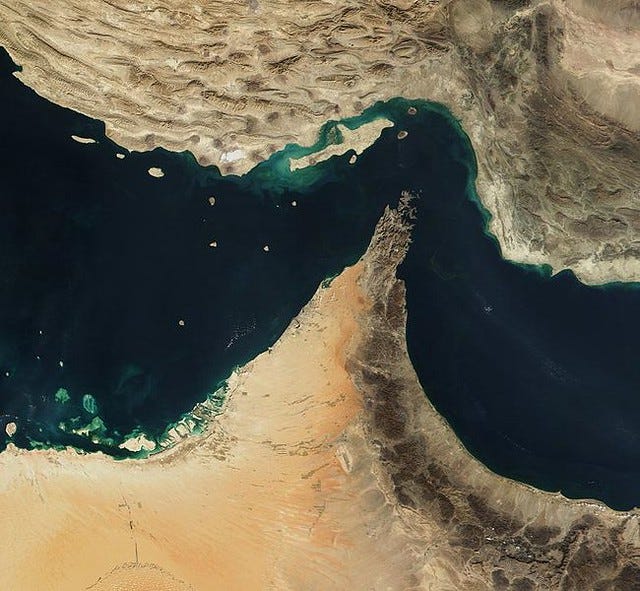
Sharif knows very well that the MOU is not a peace deal. It is a ceasefire agreement primarily meant to open the Strait of Hormuz, and secondarily to outline the framework for subsequent negotiations for an actual peace deal, where the more difficult issues will be addressed. The chances of that latter deal coming to fruition in the near term are slim at best.
But Sharif knows that Trump wants to sell this as a peace deal. More importantly, he knows that only something that Trump can claim as a “great victory” will keep the president determined to pressure Israel to stop trying to destroy this ceasefire process.
This is highlighted by the fact that Sharif doesn’t mention Israel at all, reinforcing what has been clear all along; namely that Israel opposes this deal and will not willingly abide by it. Sharif makes sure to thank all those who are working toward a diplomatic resolution, and leads with the U.S. and Iran, leaving only one major belligerent in this war outside of the statement.
Sharif makes the MOU real by finally announcing a time and place for its signing, June 19 in Switzerland.
By doing so, he created a framework for Trump. For the next five days, Trump will have to put the proverbial screws to Israeli Prime Minister Benjamin Netanyahu. Calling names and cussing him out are not going to be sufficient.
Israel is determined to scuttle this deal
Sharif’s announcement started the clock in Jerusalem. Netanyahu and his cabinet are undoubtedly, at this moment, drawing up plans for attacks in Lebanon, and possibly even in Iran.
Netanyahu knew this was coming, of course. It has been clear that Trump’s pronouncements this time around held more substance, largely because even the Iranians were publicly agreeing that an MOU was close to being finalized.
So, on Sunday morning, Israel used a minor incident as a pretext to once again start bombing the Beirut suburbs, a red line they know Iran would respond to.
Iran promised to respond, but it seems that American diplomats, under Trump’s direction, intervened. One imagines they argued that Iran should not give Netanyahu what he wants but should respond by agreeing to announce the upcoming signing of the MOU. Whatever the argument they used, Iran apparently agreed, as there has been no retaliation yet.
But Israel will have no compunction about killing any number of Lebanese civilians or destroying any amount of Beirut if they believe it will thwart this MOU from coming into force.
Israel is desperate to avoid the Strait reopening under Iran’s control. If it does, re-starting their regime change war of choice will be much more difficult, as neither the Trump administration nor the rest of the international community—including Israel’s Arab allies—will abide threatening its closure again.
While the Strait standoff remains, the possibility of a full-scale war remains as well. Thus, the next five days are crucial.
Netanyahu will not be deterred by words. Trump must confront him with serious consequences if Netanyahu disobeys him. More than just threats, Trump must be willing to follow through on those threats, and he must convince Netanyahu that he will do so.
For now, Trump must only hold that line for a week, or even less. The reopening of the Strait will deter Israel, at least in terms of Iran.
Lebanon will be trickier.
What does a ceasefire mean in Lebanon?
Sharif said that Lebanon is included in the ceasefire. That, of course, is also what he said when the initial ceasefire that stopped the major bombing campaigns in the Gulf region was declared on April 8.
Even if Trump agrees that Lebanon is included, and even if he is willing to pressure Israel into stopping its bombings, it is not yet clear that a ceasefire agreement means Israel must withdraw from southern Lebanon.
If withdrawal is what is required, that will be a heavy lift for Trump. The resistance from both Netanyahu’s allies in his government and the opposition will be huge. It will be, in short, a political disaster for Netanyahu, and it will come just as Israel’s election season is about to kick off. Likud’s internal party elections are just over a month away.
To get Netanyahu to stop killing Lebanese citizens, and even more, to withdraw entirely from Lebanon, Trump would need to threaten to halt arms shipments to Israel. There’s nothing else that will be as effective.
But Trump has shown little inclination to do that.
Netanyahu has played Trump carefully. He avoids confrontation and is always eager to flatter the narcissistic president. But this will be a moment which offers little wiggle room.
Netanyahu can rely on some of his Republican friends to help pressure Trump. Watch for statements from Lindsey Graham, Ted Cruz, and leading hawks from institutions like the Foundation for the Defense of Democracies, AIPAC, and similar think tanks that are highly critical of the MOU, while largely avoiding criticizing Trump directly.
Ultimately, though, there will also be many Republicans who will press Trump to settle the Iran issue while he has the chance. They know their party is taking terrible hits due to this war, and, while many major Republican donors are ideologically supportive of Israel and a hawkish stance on Iran, they are far more loyal to their own economic interests (with some obvious exceptions, such as Miriam Adelson), which will suffer if this war goes on much longer.
Will that be enough for Trump to apply the kind of pressure that will be required to ensure that Netanyahu does not undermine this MOU signing? It’s easy to be pessimistic, but there are real reasons to think it is at least possible.
The next five days will tell the story.
For professional information and contact:
LinkedIn: https://www.linkedin.com/in/mitchell-plitnick-616ba5
For my latest hot takes, comments, and news updates follow me at:
Facebook: https://www.facebook.com/MitchellPlitnick
Twitter @MJPlitnick or
Bluesky @mjplitnick.bsky.social
I also post occasionally on these sites:
Mastodon @MitchellPlitnick@journa.host
Instagram @mjplitnick